Lawn Care
Lawn Fertilization in Spanish Springs, NV
From $25
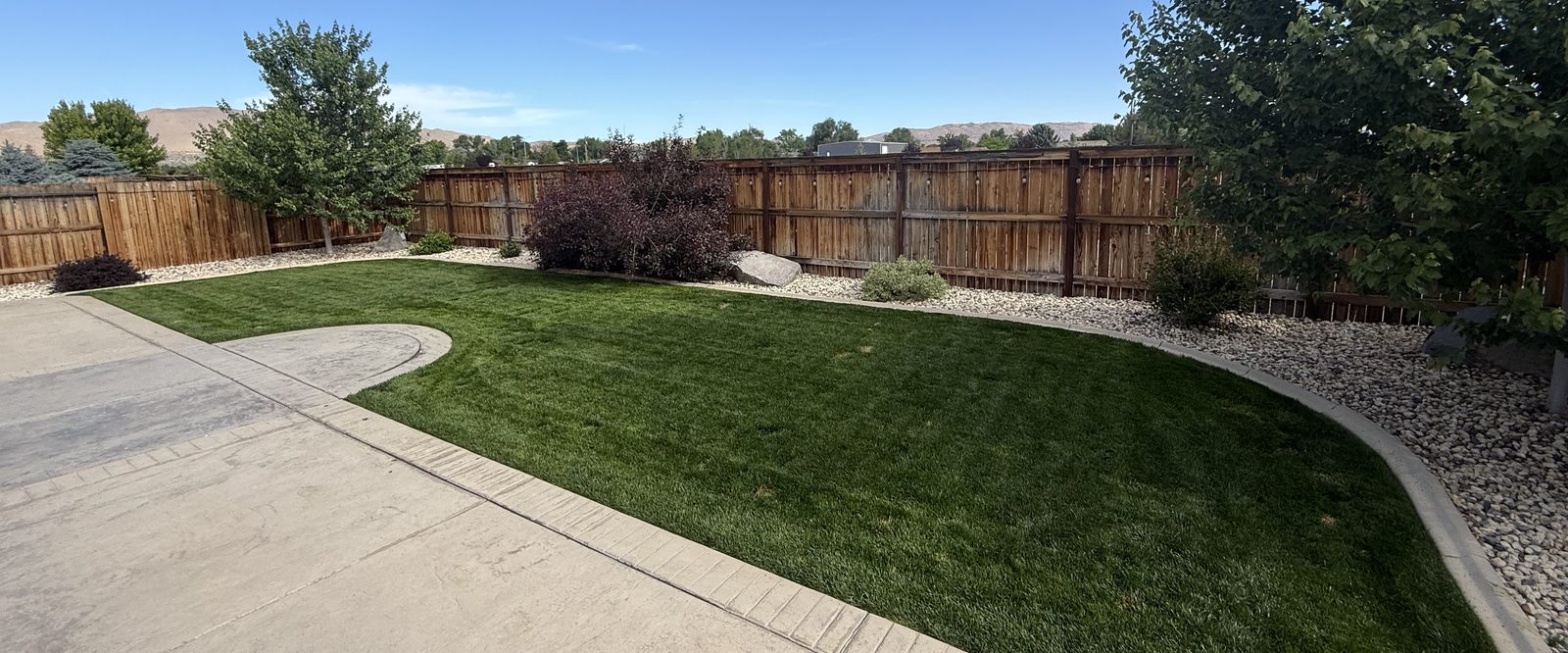
Our soil doesn't hold onto nutrients well. It's dry and full of minerals, not rich growing dirt. A lawn out here uses up its food faster than you'd expect. We feed lawns on a schedule built around each season, timed to when local grass actually uses the food.
Call (775) 376-5318Watch For
Signs You Need It in Spanish Springs
A lawn low on food fades slowly before it dies. That's why it's easy to miss until it's obvious.
- Color dulling or turning yellow, with no clear cause like dry weather or bugs
- Growth slowing down, even in the middle of the growing season
- A lawn that turns green slower than the neighbor's after winter
- Thin spots where grass used to fill in fine on its own
The Reason
Why You Need It in Spanish Springs
This is different from the bulk fertilizer we sell for you to spread yourself. This is us doing the feeding for you. We time it to our soil and elevation. We don't just run a generic four-times-a-year plan built for a different climate. Skip a season, and the color drops before anything looks wrong. By the time it's obvious, the lawn's already been running on empty for weeks.
Timing
Best Time To Do It in Spanish Springs
Spring and fall, when local grass is growing and can use the food. We go lighter in summer, since heat stress makes it harder for a lawn to handle a heavy feeding. Feeding on a fixed calendar instead of the real growing season wastes fertilizer. It can also push growth at the worst possible time.
Ready For Color That Doesn't Fade By July?
Call (775) 376-5318Free Estimate
Transform Your Lawn
Fill this out and we'll call or text you back, or just call (775) 376-5318 if that's easier.